Province gives 10-day 'washout' period to pharmacists as generic drug policy changes loom Times & Transcript May 26, 2012


NBers struggle with drug prices

Province gives 10-day 'washout' period to pharmacists as generic drug policy changes loom

BY ERIC LEWIS


TIMES & TRANSCRIPT STAFF


While the provincial government's new generic drug policy has been touted as an effective way for the province and for New Brunswickers to save money, there are still many people falling through the cracks, struggling with the cost of medication.

Insurance companies and various groups in the province applauded the new policy, first announced in March, but they acknowledge there is much left to do to make health care more affordable for New Brunswickers.

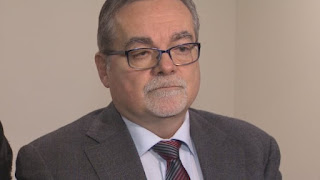
'We recognize the changes as a big step forward to try to reduce the costs for prescription drugs to make it more affordable,' said Miguel Le-Blanc, executive director of the New Brunswick Association of Social Workers.

'It is moving towards the right direction. There is still work to be done, but we're encouraged by the first steps.' The generic drug policy, coming into effect June 1, sets maximum allowable prices for generic drugs that pharmacies can charge, reducing prices to 40 per cent of the brand price by June 1 and then to 35 per cent by December. Currently, generic drugs in New Brunswick are as high


See
GENERIC , A13

Article Continued Below

See GENERIC on Page A13

Generic drug policy to take effect in N.B.

Continued From A1

as 70 per cent of the brand name price.

The province expects to save roughly $16 million over the next 10 months and roughly $20 million in each full year afterward compared to current spending.

While the majority of New Brunswickers have drug coverage through private drug plans or through publicly-funded drug programs like the New Brunswick Prescription Drug Program, about 200,000 New Brunswickers, 25 to 30 per cent of the population, have no drug coverage and must pay for prescriptions out of their own pocket.

'So how can we provide access to all New Brunswickers to gain access to vital pharmaceuticals?' LeBlanc asked.

He noted that the province is hosting consultations on potential ways to help New Brunswickers who don't have medical coverage.

A Department of Health spokesperson said consultations on this topic are ongoing. The province's Economic and Social Inclusion Corporation Advisory Committee on Health Benefits has targeted fall to have its recommendations to government.

Cécile Cassista, executive director of the Coalition for Seniors and Nursing Homes Residents Rights, said the generic drug price changes are long overdue, but there is still much work to be done.

She said there are many seniors in the province who sit just above the low-income mark and thus don't qualify for assistance.

A low-income senior is a person living on $17,198 or less a year or a couple living on $26,955 or less.

Cassista said it's not fair that seniors who make only a few dollars more than that don't qualify for assistance. Those seniors find themselves in a situation where they have to decide where to spend their limited income.

'They do without other things in order to meet the needs to get their prescriptions,' she said.

And those seniors who do qualify for the provincial drug plan are now paying more than they used to. Earlier this year, the Tory government increased the co-pay for prescription drugs for low-income seniors from an annual maximum of $250 to $500 per person.

Cassista said there are about 55,000 low-income seniors in the province affected by that change.

'They have to pay out of their pocket until they hit that cap,' she said.

A Richibucto woman told the Times & Transcript recently that she doesn't expect to see much benefit from the generic drug price changes. Susan Maillet, 55, has been on disability for more than 15 years.

She suffers from a degenerative disc disease, osteoarthritis and fibromyalgia.

She requires pain medication, anti-depressants, muscle relaxers, blood pressure medication and a heart rhythm pill, plus additional medication to help with the stomach ulcers she gets due to the amount of drugs she requires.

She spends hundreds of dollars a month on prescriptions, some of which don't have a generic alternative.

'There's months that I can't afford to buy certain medications,' she said.

She can't get medical insurance, but Maillet and her husband, a carpenter, also don't qualify for provincial assistance. She is creative in finding ways to save money on prescriptions, such as paying a friend to drive to Moncton to pick up prescriptions just so she can save a bit on dispensing fees.

'They're so widely varied that it's incredible,' she said, noting that it pays to shop around.

Maillet said one can also save on dispensing fees if they can get their doctor to issue a prescription that will cover a longer period of time.

While some New Brunswickers might find savings on generic drugs, other pharmacy-related expenses may be going up.

George Murray, pharmacist and owner of Tantramar Pharmacy in Sackville, told the Times & Transcript this week that with generic drug prices being slashed, the loss in revenue he faces will force him to start charging clients for services that had been free.

'I have a guy who comes in every week to get his blood pressure checked,' Murray said. 'We're going to have to start charging for that.' The pharmacy will also start charging for glucose checks, travel medication reviews, prescription delivery and prescription re-orders.

'It's not a decision I take lightly but I feel like I don't have any other options because I just can't continue to lose money on every prescription I fill for the province,' he said.

'Unfortunately, those people who can least afford it - like seniors, low-income patients and those with serious health concerns - will be the most impacted.' Paul Blanchard, executive director of the New Brunswick Pharmacists' Association, said Murray likely won't be the only pharmacist charging for services in the future.

'The financial impact of the change that the government is bringing is such that pharmacies are either going to be cutting staff or hours of service and so on or charging from now on for services where previously there was no charge,' he said.

The province will reinvest some of the money it will save from the generic drug policy - $6.2 million annually - into pharmacy services to offset some of the revenue losses that will be felt, but pharmacists say it isn't enough.

The government will also allow pharmacies to increase dispensing fees per drug by one dollar, from $9.40 to $10.40, but Murray said dispensing drugs can cost up to $15 per prescription. Pharmacies will also be able to mark up generic drug costs by as much as four per cent up to $50 per drug.

Yesterday, the province announced that pharmacies will be allowed a 10-day transition period to help them adjust to the new generic drug pricing policy. This means that pharmacies who paid a higher price for drugs purchased prior to June 1 will have an additional 10 days where the province will reimburse them at the higher rates.

'Our government recognizes that reducing generic drug prices will impact pharmacy revenues,' said Health Minister Madeleine Dubé. 'In response to the concerns expressed by pharmacy owners, a 10-day transition period will be implemented to allow pharmacies to further reduce inventory purchased at higher prices.' The NBPA had asked for a 30-day 'washout' period, and Alistair Bursey, president of the association, said 10 days is not enough.

'Pharmacies can't turn their inventory that fast and my members are still going to lose a significant amount of money,' he said.

Dubé also announced a plan to engage pharmacies by establishing a working group which includes representatives from the Department of Health and the New Brunswick Pharmacists' Association.

The group will monitor the savings achieved by the generic drug policy in the first year and will discuss opportunities related to the role of pharmacists in the health-care system and as well as potential reinvestment should savings be higher than projected.

Generic drug price cap sparks PR war in N.B. Pharmacists' association fighting government's plan CBC News Posted: May 25, 2012 5:41 AM AT Last Updated: May 25, 2012 7:21 AM AT

 Canadians using more prescription drugs, tracking firm reports

Meanwhile, many seniors are worried about what will happen, said Cecile Cassista, of the Coalition for Seniors Rights.

"They are making decisions whether they should be buying good food and fruit, or go without medications. So there are tough times for them these days."

http://www.cbc.ca/news/canada/new-brunswick/story/2012/05/24/nb-pharmacists-generic-drugs-cap.html

Province hikes nursing home rates Telegraph Journal May 11, 2012

Social Development Minister Sue Stultz announced Friday the per diem rate seniors are charged in nursing homes will rise to $113 per day from the current charge of $95 over the next three years. Photo: Peter Walsh/Telegraph-Journal Archive

Government-Provincial

FREDERICTON – The New Brunswick government is significantly increasing the daily rates seniors are charged in nursing homes. Social Development Minister Sue Stultz announced in the legislature the per diem rate will rise to $113 per day from the current charge of $95 over the next three years.

The move triggered immediate criticism from the Opposition Liberals and from seniors’ representatives, but Stultz said the vast majority of people living in nursing homes have their costs subsidized by the province.
“The people who are going to pay are only the people who can pay,” Stultz said during question period on Friday.

“We will be paying it for the people who cannot pay. I do not really think that the (Opposition) should put any type of negative feedback out there to the people who are in that situation. We work very, very closely with the nursing home association and all associations pertaining to seniors. We will continue to do that, and we will continue to look after our seniors in New Brunswick.”

Cecile Cassista, executive director of the New Brunswick Seniors’ Coalition, said that while 88 per cent of nursing home residents are subsidized, roughly 800 pay their own daily charges. She said the increase will hit them hard.

“This is only pension money we’re talking about,” Cassista said. “At least some of them may have to apply for a financial subsidy. Cassista said she was shocked by the surprise announcement. “They’re dropping the ball again on seniors,” she said.

“We met with the minister on April 18. She didn’t indicate anything about this. I don’t feel this government is transparent. I feel this is all under the table. The first increase to a maximum of $101 per day from $95 per day will take place on July 1. The remaining increases will come in 2013 and 2014. 

Liberal critic Bertrand LeBlanc said in the legislature that the increase will hit many seniors hard.
“There are about 800 people who are going to be surprised because they are going to get that increase when they go into a nursing home and pay the per diem,” LeBlanc said.

“It affects a lot of people, and it will affect them for the next three years. Something has to be done. If the government is going to be giving care, it should.”

LeBlanc asked how much of the increase will go to boosting hours of care seniors get in the homes. Premier David Alward promised during the 2010 election campaign to increase the care to 3.5 hours from the current 3.1. Stultz said that is still under study.

“We know how to look after our seniors in the province,” she told the House.“We look after them now, and we will look after them in the future. We will ensure that they are kept safe.”

Fall summit will decide nursing homes' future Daily Gleaner May 11, 2012

Care | 717 seniors waiting for nursing home beds

BY LAUREN BIRD


Problems facing New Brunswick's nursing homes aren't new and aren't being fixed.


Jean-Eudes Savoie, vice-president of the NB Association of Nursing Homes, said decisions regarding the future of nursing homes won't be decided until a summit in November. Savoie was speaking at the New Brunswick Association of Nursing Homes annual meeting, called Embracing Change: Leading Through Innovation, on Wednesday.


'When we look around at other countries and other provinces, all those jurisdictions have taken actions and have made changes toward what we call today long-term care organizations. And that's what we have to do in New Brunswick if we want to be sustainable in the near future,' Savoie said.


'Right now, it is very difficult.' Finances and the education of aid workers are the biggest issues facing the province's nursing homes, according to Savoie and Micheal Keating, executive director of the NB Association of Nursing Homes.


Savoie said instead of operating independently, nursing homes will have to work in collaboration with other care providers and with government.


The November summit will involve about 500 members and workers discussing new ways to provide care to seniors on a long-term basis.


'The government told us that they're going to change how we do business and of course, they fund us
to large degree.

'We have to find ways to be able to respond to tomorrow's challenges, which are really today because we don't have enough nursing home beds,' Keating said.


Even with more than 1,000 nursing home beds the government announced it would provide throughout the province, about 20 per cent of hospital beds are occupied by seniors needing nursing home care. In April, 717 seniors were on the wait list for long-term care.


Although decisions haven't been made on whether more private longterm care will be provided or if there will be more specialized centres for dementia and Alzheimer's patients, Social Development communications officer Mark Barbour said the government plans to work with the association to make the system more efficient.


But Cecile Cassista, executive director for the coalition of seniors and nursing home residents rights, doesn't think things are moving fast enough or in the right direction.


'We are so far behind; we need to be looking at our home-care program,' Cassista said.


The annual meeting, which concluded Thursday, was dedicated to preparing members for changes after the November summit.


'We have a set pattern of how things work, but it's not working. It's not sustainable, that's why we have to move on,' Keating said.


Keynote speaker Nancy Fox told Wednesday night's audience to change their organizations to better serve long-term care residents for the future. Fox is the chief life enhancement officer at a long-term care facility in Colorado.

Seniors Working Group Meet with Government Officials April 18, 2012

Cecile Cassista, executive director of the Coalition for Seniors and Nursing Homes Residents Rights,shared her concerns regarding prescription drug plan co-pay for low-income seniors Wednesday during a meeting between six seniors groups and Social Development Minister Sue Stultz.

 
(Moncton) Six seniors’ organizations who have been working together on common issues for seniors traveled to Fredericton on April 18, 2012  for a meeting to discuss the recent change to the low income prescription drug program that was increased by 100% in January of this year.

Amongst other concerns  discussed were the mandate for better protection for seniors, Seniors Panel- Five Member Group appointed, Government Renewal and Restructuring-Secretariat and the recent change to Old Age Security from age 65 to 67.

The six working groups consist of the following:

NB Common Front for Social
Coalition for Seniors and Nursing Home Resident’s Rights                                        
L’Association acadienne et francophone                              
CARP
New Brunswick Senior Citizen Federation
New Brunswick Federation of Union Retirees
Read more under briefs - under important information